

Looking for ADHD testing in Minneapolis? Learn what ADHD evaluation involves, how QbTest may support assessment, and what to expect from your evaluation.

Wondering whether ADHD may be affecting your focus, organization, impulsivity, or daily life? Pinnacle Behavioral Healthcare provides comprehensive ADHD testing to help patients better understand their symptoms and explore appropriate treatment options.
ADHD can look different from one person to another.
For some people, it may show up as difficulty concentrating or completing tasks. For others, it may involve impulsivity, restlessness, disorganization, forgetfulness, or difficulty managing time.
And sometimes, what looks like ADHD may have another explanation.
That’s why an ADHD evaluation should be more than a quick questionnaire or a single computer test.
At Pinnacle Behavioral Healthcare, our clinicians consider your symptoms, medical and mental health history, daily functioning, and other relevant factors as part of the evaluation process. When appropriate, objective assessment tools such as QbTest may also be used to provide additional information.
The goal is not simply to give you a label. It’s to help you understand what’s happening and determine what kind of support may be appropriate.
ADHD is a neurodevelopmental condition that can affect attention, impulse control, activity level, organization, and executive functioning. Symptoms can interfere with school, work, relationships, finances, and everyday responsibilities.
A proper evaluation helps distinguish ADHD from other conditions or circumstances that can cause similar difficulties, such as anxiety, depression, sleep problems, stress, or certain medical conditions.
There is no single test that can determine whether someone has ADHD. Instead, clinicians use information from multiple sources to develop a clearer understanding of your symptoms and how they affect your life.
As part of an ADHD assessment, Pinnacle Behavioral Healthcare may use QbTest when clinically appropriate.
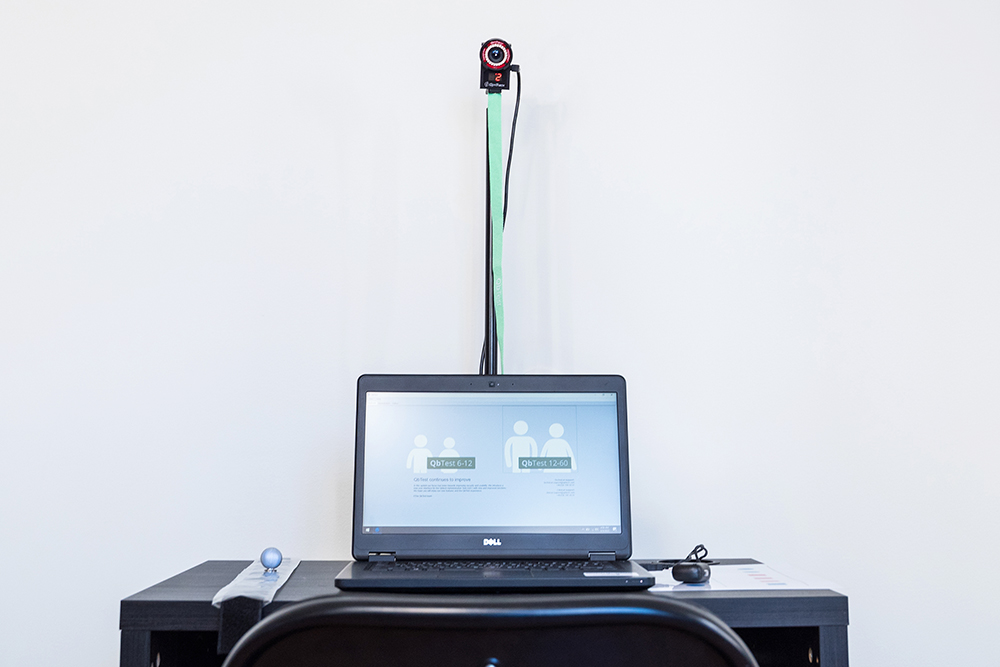
QbTest combines a computerized attention task with motion tracking. It provides objective measurements related to areas such as attention, impulsivity, and activity level.
The results can give a clinician additional information to consider alongside the rest of the evaluation.
QbTest can provide quantitative information about:
However, QbTest is not a standalone diagnostic test for ADHD.
Your clinician considers the test results together with your history, symptoms, functioning, and other clinical information. That distinction matters. A computer cannot tell the whole story of a person’s life.
Knowing what to expect can make the evaluation feel much easier.
Your evaluation begins with a conversation about what you’re experiencing and why you’re seeking an ADHD assessment.
You may discuss concerns involving:
Your clinician may also ask about your medical history, mental health history, medications, sleep, and other factors that could affect attention or behavior.
Your clinician reviews the information gathered during the evaluation to better understand your symptoms and how long they have been present.
Because ADHD symptoms can overlap with other conditions, the evaluation also considers possible alternative or contributing explanations.
Depending on your individual circumstances, QbTest or another assessment tool may be included.
During QbTest, you’ll complete a computerized task while wearing a motion-tracking device. The assessment measures performance and activity patterns that can provide additional objective information for your clinician.
Once the relevant information has been reviewed, your clinician can discuss the findings with you and explain the next steps.
If ADHD is identified, your clinician can discuss appropriate treatment and management options based on your individual needs.
If your symptoms are better explained by another condition or concern, the evaluation can help point you toward appropriate care.
You don’t have to fit a perfect description of ADHD to ask about an evaluation.
You may want to consider an assessment if you consistently experience difficulties such as:
You may find yourself losing track of conversations, becoming distracted easily, or starting tasks without finishing them.
Keeping track of appointments, deadlines, belongings, or responsibilities may feel harder than it seems to be for other people.
You may frequently underestimate how long tasks will take, procrastinate until deadlines are close, or struggle to prioritize competing responsibilities.
Interrupting others, acting before thinking, making spontaneous decisions, or having difficulty waiting your turn may be part of the picture.
Some people experience ADHD primarily through inattentive symptoms, while others experience noticeable hyperactivity or restlessness.
The most important question isn’t simply whether you recognize yourself in a list of symptoms.
It’s whether these difficulties are persistent and interfere with your work, education, relationships, or everyday functioning.
ADHD is not limited to childhood. Some people are diagnosed during childhood, while others don’t recognize their symptoms until adolescence or adulthood, when work, school, relationships, or increased responsibilities make those difficulties more noticeable.
An evaluation can help clarify whether long-standing patterns of inattention, impulsivity, hyperactivity, or executive-function difficulties may be consistent with ADHD.
For adolescents, the evaluation may also consider information from parents, caregivers, teachers, or other appropriate sources when available. The specific evaluation process depends on the individual’s age, symptoms, history, and clinical needs.
It can be tempting to take an online ADHD quiz and assume the result provides an answer. It doesn’t.
Online questionnaires can sometimes help someone recognize symptoms worth discussing with a professional, but they cannot replace a clinical evaluation.
ADHD symptoms can overlap with anxiety, depression, sleep disorders, substance use, stress, and other conditions. A careful evaluation helps clinicians look at the bigger picture. That’s especially important when deciding whether medication or another form of treatment may be appropriate. Learn more….
Testing shouldn’t be the end of the conversation. If your evaluation supports an ADHD diagnosis, your clinician can discuss treatment and management options with you.
Depending on your circumstances, treatment may involve medication management, psychotherapy, behavioral strategies, lifestyle adjustments, or a combination of approaches.
If ADHD isn’t the best explanation for your symptoms, that’s useful information too.
You can then focus on identifying and addressing the factors that may actually be affecting your concentration, mood, organization, or daily functioning.
Choosing an ADHD evaluation is a personal decision. At Pinnacle Behavioral Healthcare, we aim to make that process informative, respectful, and focused on the individual not just the symptoms on a form.
Our behavioral healthcare services include ADHD testing alongside other mental health services, allowing patients to explore their concerns and, when appropriate, continue into ongoing care. [Click to learn more about our services.]
Whether you’ve been wondering about ADHD for years or you’re only recently noticing patterns that concern you, you deserve an evaluation that takes your experience seriously.
Consider talking with a qualified mental health professional if persistent difficulties with attention, organization, impulsivity, hyperactivity, or executive functioning are interfering with your work, education, relationships, or daily responsibilities.
No. QbTest is an objective assessment tool that may provide additional information during an ADHD evaluation. A clinician considers QbTest results alongside symptoms, history, functioning, and other relevant clinical information.
Yes. ADHD can be evaluated in adults as well as children and adolescents. Adult evaluations often examine current symptoms along with developmental and functional history.
The process varies depending on the individual. It may include a clinical interview, review of symptoms and history, questionnaires or rating scales, and objective testing such as QbTest when appropriate.
Yes. Difficulties with concentration and attention can occur for many reasons, including anxiety, depression, sleep problems, stress, and other health concerns. A comprehensive evaluation helps consider these possibilities.
Your clinician can discuss treatment and management options based on your symptoms, goals, age, medical history, and other individual factors. Treatment may include medication, psychotherapy, behavioral strategies, or a combination of approaches.
You don’t need to keep wondering whether your struggles with focus, organization, impulsivity, or time management something are simply you need to “try harder” to fix.
If ADHD may be affecting your life, an appropriate evaluation can help you move from uncertainty toward a clearer understanding of what’s going on.
At Pinnacle Behavioral Healthcare, our team can help you explore whether ADHD testing is appropriate for your situation and discuss what the next step could look like.
Ready to get started? Schedule an ADHD evaluation with Pinnacle Behavioral Healthcare and take the first step toward clearer answers and personalized care.